The Italian Bookshop – first published 11/2/14

I posted a few months ago that I had started to learn to speak Italian. I purchased my textbooks online, but through the Italian Bookshop in Soho. Of course, now I’m on the mailing list, and recently received an invitation to a function that was taking place there yesterday. I didn’t understand most of the e-mail – way too advanced for me, but my Italian friend gave me the gist of it, and agreed to come along with me.

The basis of it was that there were two female journalists, one of whom has written a book called Do You Know Who I Am. More correctly, that’s how it translates into English. The author, who writes for Marie Claire, Vogue and others, was talking about her experiences interviewing various Hollywood stars, and other aspects of her working life. My friend told me that I’d really have enjoyed it had I been able to understand it.

The event ended with wine and nibbles. The manageress of the bookshop started to talk to me in Italian and my friend explained that I am a studentessa.

The manageress said, “Maybe it was too advanced for you, but brava!”

She was right, it was too advanced for me, I understood a few words, but that was it. Good job I had V to translate.


©Susan Shirley 2014

Travelling to Work

It takes me just 14 minutes to walk from my house to the station. On Friday, it was the longest 14 minutes of my life. I was not halfway down the road when the Heavens opened. By the time I reached the station I was absolutely drenched.

Didn’t I know it was going to rain? Yes, of course, I had seen the weather forecast. But I wasn’t expecting it to rain quite so early in the day, nor quite so heavily. Showers, they had said on the BBC, my main source of reference for these things.

If your definition of a shower is hard, pelting rain that comes down like stair rods, almost like hail but not quite, that only lasts about 8 minutes, then yes, I suppose it was a shower. That is not, by the way, my definition of a shower.

Anyway, I survived that particular ordeal and arrived at the station somewhat bedraggled, but ready for the next step in my journey. As it’s the school holidays, the trains are not too crowded at the moment. My preference is usually to sit at the end of the carriage, out of everyone’s way, except for those who think it is a jolly jape to steam through the carriages. However, on this occasion, the window was wide open. If I sat by the window when it was raining, I knew from experience that there was a strong chance that I would get wet as the rain was blown into the carriage.

Why didn’t I close the window, I hear you ask? Well, that is often easier said than done. Some of those windows are really stiff and I find them impossible to close. And anyway, you will recall that I was still soaking wet and wanted the air to circulate to help dry me off. I had no desire to spend the entire day with a wet bottom. I sat a little further down the carriage.

There was a chap a bit further along, talking to himself very loudly. Actually, on further inspection, he was talking on his ‘phone with the hands free thingy. Years ago, we London travellers would have avoided anyone who spoke to themselves like the plague. It was always a sign that they were mentally ill. (Ok, back in the day we’d have called them “nutters” but I am far too politically correct for that now.)

I’ve encountered more than my fair share of them over the years. I remember vividly travelling home on a number 38 bus one day. My hair was in a chestnut coloured bob at the time (it’s relevant, believe me. What happened wouldn’t have happened if I’d looked the way I do now). I was reading a newspaper, and I do tend to get quite engrossed when I’m reading, to the extent that I’ve even missed my stop before now. Anyway, eventually I became aware of a woman sitting behind me who said something like,

“You Asians, you come over here and take our jobs…..” Moan, moan, moan.

To be honest, I didn’t pay much attention, just vaguely wondered who was the target of her venom. I’m a bit on the pale side, and if I get mistaken for any nationality, it’s usually Dutch. Must be something to do with the clogs I suppose. Anyway, the droning on behind me continued and I heard something about “reading a newspaper.” That stopped me in my tracks. I turned around. The moaning woman gaped in horror as she stared into my baby blues.

“Oh, you’re not……. are you?”

“No, I’m not, although I’m not sure exactly what difference that makes?”

The woman didn’t answer me but she did get off at the next stop.

Back to Friday’s journey. I changed trains at the mainline interchange. The trains are air conditioned and, if the connection is there when the first train pulls in, it’s quicker. The carriage was almost empty, which was good for me, because I wanted to write this blog post. Except for the fact that other occupant in the carriage was chewing gum. You know the sort, don’t you? Open mouthed and very, very noisy. Really? I am not a dentist and do not wish to inspect your teeth. My mother would have slapped me if I’d done that as an adult, never mind as a child. I do realise that you can’t eat chewing gum in an elegant or stylish fashion, I really do, but honestly, can’t people hear themselves? It’s disgusting.

Which leads me on to my next rant du jour, but you’ll have to wait for my next post for that one.


©Susan Shirley 2014

My First Job Interview

I was writing an article yesterday, on an HR related topic, which put me in mind of my first job. Or, more correctly, my first job interview, if you can call it that.

As a teenager, I don’t think I planned for anything and didn’t have the faintest clue what I wanted to do. I stopped full-time education when I was 16, so in the months before I finished school, there was a quick interview with the careers advisor (I say “quick” because I doubt that I contributed anything of value to the conversation) and I went back to class. That meeting went something like this:

“What would you like to do when you leave school?”

“No idea.”

“What are your interests?”

“Um, well, I like reading. And animals.” There were other things, but playing poker and going out drinking are things that you just can’t tell your careers advisor.

“Animals? Would you like to train as a veterinary nurse?”

“No.”

“Why not?”

“I’ll get upset if they have to put animals to sleep.

“What about an office job?”

“Ok then.”

The next thing I knew was that I had a job interview, for an office job.

I don’t now remember exactly when the interview took place, but I know that my first day at work was 6 August, and I’d only had a couple of weeks off since leaving school, so my guess is that it was the end of June/beginning of July. I don’t remember completing an application form either, although I suppose I must have, as I was being employed by a government department.   Anyway, I digress.

I went to an all girls’ school, and we played hockey every week. When I say, we played hockey, that was what it said on the curriculum. Can you imagine all those female teenage hormones together in one place, with no outlet apart from brandishing a stick, not necessarily towards a ball? What an aggressive bunch of heathens they were. I remember clearly one of the bones in my foot being knocked out of position by the action of a wayward hockey stick because I happened to be in the wrong place at the wrong time. There was nothing jolly about it at all, from my recollection, and whoever coined that particular expression has clearly never played the game with other teenage girls.

On the day of my interview, we’d played hockey. We didn’t shower after hockey, I don’t really remember why. So, I turned up for my interview wearing my uniform school dress, which was fine blue, grey, white and black stripes, and actually nicer than it sounds, my royal blue school blazer, and my extremely attractive royal blue hockey socks, which insisted on slipping down to my ankles, revealing my matching bruises and bits of mud. I looked as though I’d been in a fight, not a hockey match. You’ll be pleased to learn, though, that I had managed to take my hockey boots off and put shoes back on though, so you can see, I was all about making a good impression.

I have absolutely no idea what was going through my mind, I’m sure I must have been a bit nervous. Anyway, I made my way to the government building, announced myself in the front counter, full of social security claimants. I must have looked very out of place. Someone came to collect me, and I was taken up to the office of Mr M.

Very welcoming he was, too. He shook my hand and invited me to sit down. Now, I must have been very naive, because there were absolutely no papers on his desk (this was before we used computers) but I assumed that, as he was the big boss, he was the busiest man in the world. My Mum and Dad have a lot to answer for, bringing me up with an inherent sense of faith in authority, and believing every word that people tell me.

As interviews go, it was pretty easy. I don’t remember what questions he asked me, but I do remember that I made him laugh a lot, and I did a lot of laughing. It was all very jovial. I must have been smoking hot.

I’ve ever had another interview like that. I even remember being given a cup of tea, and that’s never happened since either! I seem to recall being asked very difficult questions in later interviews, so that first interview really set me up for the wrong view of the world of work.

There was a point in time when I was having so many job interviews that I became very proficient at them and I actually started interviewing the interviewers. (That’s a really bad tactic, by the way. A few pertinent questions at the end of the interview are fine, but not throughout the interview. Nowadays, with my interviewing experience, I wouldn’t let anyone do that to me, and would be decidedly miffed if anyone tried, but I seemed to get away with it.)

It’s all much more formal nowadays, at least with big employers. You can’t ask this or that because of various bits of European legislation and fashions in interviewing have changed, just as with clothing. We HR types particularly like behavioural and competency based questions, such as “Can you give me an example of when you did….?”

Of course there are the questions that we were discussing in the office the other day, such as “What kind of dog are you?” (The kind that likes a comfortable bed and lots of food) or “How do you weigh an elephant?” but these are used more by non-HR professionals. Just for the record, the answer isn’t the important bit in these questions; it’s the thought process and your ability to think on your feet that matters.

Back to my job interview, I was offered the job, and worked there for several years, so I clearly won Mr M over with my charm and wit. Let’s hope I can do it again when I start job-hunting again.


©Susan Shirley 2014


ENGLISH UNITS OF MEASUREMENT

We were having one of those conversations in my office at work the other day, you know the ones: they start from nowhere and really don’t lead anywhere but take you back to things you learned at school. Well, things some of us learned at school.

I feel the need to say right now that, although I’m the oldest one in my office, I am not, old. I like to think of myself more as a fine wine. Well, I drink enough of the stuff, so I should be.

I don’t know how we got onto it, but I asked my colleagues whether they knew what a furlong or a chain was. They didn’t. I know it’s all metric nowadays, but when I was at school, we were taught about these old measurements. And very logical they all were too. The measurements derived from things like how far you could plough a furrow before the horses tired (a furlong) or a yard believed to being the distance from the tip of the nose to the end of the thumb when the arm is outstretched. Who needed a tape measure?

Oh Suzette and Theresa, you don’t know what you missed out on when you were at school. What do you mean, what happened if your arm was longer than mine? Well, that may be why it all changed in the 1800s. By the way, some of the names used are the same as those used in the US, but the measurements are not always the same. No confusion there then.

English units are those that were used in England up to 1824, which evolved from both Roman and Anglo-Saxon systems. When William of Normandy pitched up at Hastings in 1066 and took over the throne, he did not, contrary to popular belief, bring a load of new-fangled Norman stuff with him. However, he did bring the bushel.Now tell me, apart from Theresa and Suzette, who hasn’t heard of a bushel and a peck? As in Peter Piper picked a peck of pickled peppers… Or I love you a bushel and a peck? (The Doris Day fans amongst you will know that one.) Moving on.

In 1824, the Weights and Measures Act was passed, and from thereon in, we used that system of measurement until we officially went modern. Or metric. Actually, it didn’t start being used until 1 January 1826. Clearly bureaucracy got in the way even then. From what I can tell, it wasn’t vastly different from the English units, but I expect passing the Act kept the MPs of the day busy. And kept them being paid, so no change there then.

For some reason that I don’t fully understand, bushels and pecks are referred to as dry measures. I’ve always thought of gallons in terms of liquid measures, but there you go. There are 4 pecks to a bushel and 2 gallons to a peck. You’ve all heard of gallons, haven’t you? 8 pints to a gallon, 20 fluid ounces to a pint, 4 gills to a pint, and 2 pints to a quart. (Quart = quarter of a gallon.)

It was length that started our conversation in the office. Oh, how I remember having to learn 1,760 yards to a mile, 8 furlongs to a mile (Theresa knew that one, from watching the horse racing). A furlong is 220 yards (I had to learn that too). A chain is 22 yards, so there are 10 to a furlong, and three feet to a yard. A foot is so named, because it was the length of an Englishman’s foot. (I don’t know the name of the particular Englishman, but I’m going with John. It was a common enough name back in the day.)

Then, of course, there are perches, roods and acres….  all units of area.

16 ounces to a pound, 14 pounds to a stone (yes, I do still weigh myself in stones and pounds. Well, I weigh myself in pounds, because that’s how I enter it into my app, but I convert it in my head as I’m getting into the shower, because that way I know where I am. And I thought you might want to know a bit about my morning routine.) 112 pounds to a hundredweight (before you ask, no I don’t know why it’s not a hundred and twelve weight, I just know there’s an exception to every rule) and 20 hundredweights make a ton.

I don’t remember having to learn it (I think I am entitled to have forgotten somethings I was taught) but a fathom is the distance between outstretched arms, which is supposed to be 6 feet. What about a hairsbreadth away? A hairbreadth was actually, according to some texts, a formal unit of length, a 48th of an inch.

We measure horses in hands. Nowadays it’s 4 inches, although way back, it was 3 inches. It was the distance between the tip of the thumb and forefinger.

When my Mum used to make cakes and pastry she literally took a handful of this and a pinch of that – no wonder it was so difficult to follow what she was doing… Well, a handful was used as an old dry measure, for grain or the like. And thumb, that was used to measure an inch. So when we use the term “rule of thumb,” it may have originated from carpenters taking rough measurements.

So, now I bet Theresa and Shauntae are really pleased that I didn’t use a “rule of thumb” to measure up that evening dress! And I know my time at school was not wasted!


©Susan Shirley 2014


LE TOUR DE FRANCE and other cycling stories

We’ve been bitten by the Tour de France bug here in Central London. Of course, I didn’t get to see it, I was stuck in an extremely boring meeting, but walking along towards Embankment tonight, a lot of the roads were still closed, and the support vehicles were making their way to wherever support vehicles make their way when they’ve finished supporting events.

I admire cyclists. It’s good exercise, for one thing. You get to places quicker than you do by walking. Of course the trade off for that is that it’s harder going up a steep hill on a bicycle than it is if you are walking it. Another reason that I admire cyclists is that they take their lives in their hands when they cycle in Central London. Mind you, they can be a danger to other road users, car drivers and pedestrians alike. There are times when I’ve only narrowly escaped a collision with a cyclist.

I used to be able to ride a bike. That was a long time ago though, from about the ages of 7 to 16. I had the usual tricycle first of all. I still think there is a lot of merit in having a tricycle. Think about it, I could get a lot more shopping on one of those than I could balance on a bicycle, it would balance better.

Anyway, back to bicycles. My big brother got what we called a two-wheeler; I don’t remember exactly how old he was. Daft name, really, considering that the word bicycle means two wheels, but never mind. I remember it vividly. It was a beautiful red and yellow specimen and I was immensely jealous. If I was very good, he’d let me have a go on it, when I grew big enough. It may even have been handed down to me. We did things like that in our family.

Eventually, I got my own bike. I thought it was so grand. It was a proper girls’ bike, maroon in colour, without the cross bar, so you could wear a skirt with it, although frankly, I can’t imagine why anyone would want to wear a skirt when riding a bike. I remember my Mum doing that though, and I suppose, back in Edwardian times, ladies didn’t wear jeans. Or trousers.

Actually, the first verifiable “bicycle” dates back to 1817 – the Draisine. It was quite a strange looking affair; it looks almost as though you’d walk along with it, which clearly defeats the object of the exercise.

From the 1820s to the 1850s, tricycles (see, I knew they were good) and quadracycles were en vogue. They looked a bit like two penny farthings attached back to front, but the penny farthing didn’t come into being until around 1870.

I don’t quite know when I stopped riding my bike; I suspect it was when I started work. About the same time that I discovered the joys of pubs and discos. (That’s what we called them back in those days.) All I know is that the last time I tried riding a bike it was an unmitigated disaster. I just managed to get off before I fell off.

Nowadays in London, we have what we call “Boris bikes.” Or Barclays Cycle Hire, as they are more correctly known, which have been in operation since 30 July 2010. A little known fact about the Boris bikes is that their riders are three times less likely to be injured per trip than cyclists in general. Strange the things you discover.

The Tour de France has come a long way since the very first race back in 1903, when it was run in six stages, each averaging 400km (compared with roughly 171km today). The first tour ran the following route:

Paris – Lyons

Lyons – Marseilles (the only stage with mountains)

Marseilles – Toulouse

Toulouse – Bordeaux

Bordeaux – Nantes

Nantes – Paris

And then, in 1974, the French allowed the Tour to come here. It seems our British xenophobia put the organisers off for quite some time. Apparently, the participants fell foul of the immigration authorities. The Tour came here so that the artichoke growers from Brittany could market their produce.

Still, they’ve obviously not held a grudge, they let it come back again in 2007, and now, again, this year. Maybe 2021 next time?


©Susan Shirley 2014

BROKEN A Short Story By Susan Shirley

“I can’t go on, I can’t go on, I can’t go on.”

“I can’t bear it, I can’t bear it, I can’t bear it.”

I screamed those words over and over and howled like a wounded animal, sobbing as I did so, for days on end. The pain I felt was physical, it really was. I didn’t know how to bear it. I still feel the pain as keenly as I did back then.

Oh, don’t get me wrong, nobody else knew then, nor do they know now. I still paint on the smile when I paint on the lipstick, just as I did the day after it happened. It’s just me, him and my friend Annie that know. I had to tell someone so I told Annie. But the pain is killing me. I still don’t understand how he could do that to me. How could he discard me that way? Like I was nothing? Maybe I was nothing to him? I’m not even sure that he cares. Maybe he didn’t ever care?

I play this over and over in my head, every single day. It’s driving me insane. I’m not interested in other men. My sex drive has vanished, which is probably a blessing. I keep asking myself whether the pain will ever diminish and I don’t have an answer. I suspect that now, it won’t.

“I can’t bear it, I can’t bear, I can’t bear it.”

When I’m alone, I can feel the tears welling up in my eyes and have to pinch myself hard to stop them. It seems to me that there is only one way out of this. I’ve heard it said that drowning is quite a pleasant way to die, although I’m not sure how anyone knows that. I could walk into the ocean and just keep walking, until the sea covers me. Perhaps that is what I should do?

I honestly don’t know what I did that was so wrong. I thought adults discussed things, but we didn’t discuss it. He ended it by text and gave me no chance to explain myself. I thought he would have met up with me to discuss it, but no. Yes, I had been wrong to question him by text. I admit that. It had been a hard evening.

“You do know that he’s having an affair with Emily, don’t you?” they said.

“Why would I know? I don’t know him that well?” I had become very accomplished at the lies.

“He’s leaving his wife for her.”

It wasn’t that that hurt so much, although, of course, he doesn’t know that. If, as I really suspected, it had been a one night stand, and she’d embellished it to make it seem better for herself with her friends, I’d have understood. I wouldn’t have been happy, but I would have understood. Things had been difficult between us. We’d both been working silly hours and I had been working away a lot.

It was the private things, the things he told me that only I knew that hurt; that made me think there might have been some truth in it. I would have told him this, if he’d given me the chance. But he didn’t. It was almost as though he couldn’t wait to rid himself of me. He’d needed me once, when things went wrong, when his child was taken into hospital, when his father died. How did it all change? I don’t know how to shield myself from the pain. I don’t know how to stop it hurting.

He told me that I shouldn’t have doubted him, but I didn’t know what he felt for me. My own insecurities came right back to hit me between the eyes, but he didn’t know any of that. He still doesn’t.

Of course, I don’t walk into the sea. I don’t know whether that’s cowardice or courage. I exist. I even smile and laugh, outwardly. But, inside, I am dying. Still dying. I can feel myself becoming brittle and solid so that there is no heart or soul left; just a shell of skin. People just see a shrivelled up old hag now.

It was all so many years ago now, I’m in my seventies now. It’s what, 30, 35 years ago? Of course, I know exactly when it happened. The date is imprinted on my memory. I still cry, frequently. I don’t self-harm anymore. I stopped that about 15 years ago, when it stopped helping.

My health is failing now, despite keeping reasonably fit.

I still wonder whether I should just walk into the sea.


©Susan Shirley 2014

Letter to an Unknown Soldier

There is a charitable organisation called http://www.1418now.org.uk.  It was advertised on BBC Breakfast this morning.  There is a statue of an unknown soldier at platform 1 on Paddington Station.  The soldier is reading a letter, so the organisation is inviting people to write a letter to the soldier, to commemorate World War One.  This is my letter:

Dear Tommy

Are you the Grandad I never met?  The one who didn’t get to meet his three sons nor see them grow to manhood?  The one who was unable to be with his wife when his baby daughter died?

What a loss for you and my Grandmother, the one we just called Gran.  She did a sterling job with those boys, you’d be proud, they grew to be fine men, all with a trade.  She instilled morals and values in them that made them grow into honest, proud men.  They were all proud to fight in the Second World War.  And, unlike you, they came home to tell the tale.

Of course, the one of whom I’m most proud is the eldest, the one who was my father.  The one I watched playing cricket and football so well.  He must have inherited those skills from you.  I bet you would have had so much fun playing football and cricket with those boys.

How awful was it for you in those trenches?  I don’t know much about them, except that you were standing shoulder to shoulder with your mates, ripe for the killing.  That they were wet and full of rats.  That the clothes you wore were really not fit for purpose,  and it must have been horrible.  I bet you must have felt so lonely and that makes me feel really sad for you.  I bet you missed having your fry up for breakfast in the comfort of your own home, and your roast beef and Yorkshire pud on a Sunday.  Gran was a fine cook, so you’d have been well catered for.

Did you know that she ended up as a cook in one of the richest households in London?  In service, as it was called in those days.  She worked her way up from the bottom, and ended up in that exalted position of cook.   She left there to go to Carshalton Childrens’ Hospital, and the stories she told from there were something else.

What was it all for Tommy?  Oh, I know what the rhetoric, of course.  There’s always rhetoric.  But really, what was it for?  We, the Allies, lost about 6 million military personnel. Somewhere between 700,000 and 800,000 of them were from Britain.  I assume that’s mostly soldiers, but I don’t know.    Over 20 million people were wounded, and if the TV programmes I’ve seen are anything to go by, some of those wounded were amputees, or worse.  I know that we shot soldiers for desertion when, often, they were suffering from what we now call PTSD.  So what did it all achieve, when, only 21 years later, we were at it all over again.  I’m not a historian, but I somehow think that there was a link between the two wars.

I’m sorry I didn’t get to meet you Tommy, but I’m grateful for what you did.  If not for you, I might not be here now, sitting up in bed, typing on my laptop.

Thank you Tommy, to all of you Tommies.

With love.


©Susan Shirley 2014

Guard Cat Rhea and Cat Language

Regular readers know that I have four cats and love them dearly. Sometimes they do things that really confuse me, other times, they just make me laugh. Rhea’s behaviour when someone comes to the front door is an example of this.
I first noticed it a few weeks ago. Someone knocked on the door and she ran to door growling. I’d never seen this in a cat before.
“Does she think she’s a dog?” I wondered.
Nothing else in her behaviour changed, she’s a very loving little thing, so I thought no more about it. Until it happened again. And again. It now happens every time someone knocks on the door. Wherever she is in the house, she runs to the front door, growling.
One of the reasons that cats growl is that they feel insecure or threatened, and it is actually not as an uncommon as I thought for cats to growl when someone comes to the door. It’s their way of saying,
“Go away, you’re not welcome here.”
Cats also growl when they are angry. And if they start hissing and spitting, leave them well alone.
Why has she just recently started this behaviour? I don’t know for sure, but I think it is because she is predominately a house cat. She will occasionally go outside, if the weather is nice and I leave the back door open, she’ll stay out for a while. But the moment that door closes, she is like a little Meerkat, standing on her hind legs at the door, until I let her back in. She has never stayed out over night and shows no signs of wanting to do so. (Which is just as well, I don’t like my girls being out overnight.)
So, because she is in the house most of the time, it’s her domain, her territory. And she’s very fussy about who comes in. The funny thing is, if someone comes in, she will usually hide. As I said, she can be a little timid.
Rhea is a great talker. If I pick her up, she says “yes” or “no.” Seriously. That’s exactly what the noises she makes sound like. In fact, all of my girls like a little chat. Particularly when they see birds in the garden. I’ve always called the noise they make when they see birds chattering, but it’s also known as chirruping or chirping. It’s a very distinctive sound, and only ever use this when they are watching birds.
I’m pleased to say that they all purr. My Titan had the loudest purr. I even recorded it and used it as my ‘phone ring tone, it was so loud. Most times it’s a good sound, but did you know that cats sometimes purr when they are distressed or in pain. It seems that it is the cat equivalent of sucking a thumb or some other similar comfort gesture.
Then there’s the meow. I think cats must be Italian, because, in the same way that in Italian, the same word can have several meanings, cats do this with meow. It can mean,
“Hurry up and feed me,” or
“I’m not in the mood for you to stroke me, I’m annoyed with you,” or
“Cuddle me.”
And then there is the yowl. Usually, this means the cat is in some sort of distress. However, quite often, male cats will make this noise when they are engaged in a turf war. Two of the male cats around here sit in my garden making this noise for hours. It’s also, apparently, a noise they make in mating behaviour. Obviously, I wouldn’t know about that, my cats are just not those type of girls.
Cats also use body language to communicate, but that’s the subject of another post. So, for now,
“Miaow.”

©Susan Shirley 2014


Follow me at http://www.wizzley.com/Telesto

The Thames Path

Yesterday, my friend Becky, her dog, the lovely Jess, and I walked some of the Thames Path. We walked from Tower Hill to Canary Wharf, which is about 4 miles.

For those of you who don’t know, the Thames Path is a National Trail, running from the source of the Thames, near Kemble, in Gloucestershire, to the Thames Barrier at Charlton. The total length is about 184 miles (so only another 180 miles to go, if I want to do the whole lot!). The trail was opened in 1996.

The original plan was that the whole path along the Thames could be walked, but in some places the Towpath is not available. The part of the Thames along which we walked, you actually need to walk along the shore in some places (so you can only do it at low tide). We elected not to do that, for a number of reasons.

There are some new, and presumably very expensive, flats along the bank side, so there are gated areas which prevent you from walking directly along the towpath. Having said all that, we were able to walk along the bank most of the way. Around St Katherine’s dock and that first part of our walk, we had to walk “inland” a bit, but it was ok, there were some old buildings which made it worthwhile.

We stopped off for lunch at the Prospect of Whitby at Wapping. The Prospect is one of the oldest pubs along the Thames (probably in London) dating back to 1520. Fortunately, there is a beer garden, so Jess was welcome. Understandably, in times gone by, the pub was frequented by those who used the Thames, and no doubt some of those were smugglers and pirates. Certainly, that is the reputation of the pub. Charles Dickens and Samuel Pepys are also believed to have been regulars. The pub also stands on the border of Wapping and Limehouse. Anyway, the food was pretty good, and not too expensive so I’d go back there again.

Whilst walking along, you get to see all the river traffic, including a rather nice yacht that passed us. I’ll be honest, I didn’t recognise most of Wapping now, much of what I remember has been pulled down and new buildings erected. We carried on to Canary Wharf and decided to call it a day there, but not before we’d looked back to see the Shard across the other side of Deptford on the south bank.

At Millwall Park (there used to be seven windmills, hence the name Millwall) we decided it was time to make out way back to the stations so we could go our respective ways home, but not before we stopped off at the Cat and Canary, in Canary Wharf, for a well-deserved drink. Canary Wharf is on the Isle of Dogs, on the site of the old West India Docks, once one of the busiest docks in the World. The name Canary Wharf comes from the name of the dock built there in 1936 for Fruit Lines Ltd, which was a subsidiary of Fred Olsen Lines Ltd for Mediterranean and Canary Islands fruit trade.

All in all, a lovely day out and good exercise as well!


©Susan Shirley 2014


My Day of Thank Yous!

One of the joys of having your own blog is that, within the confines of legality, you can write pretty much anything you want to write.

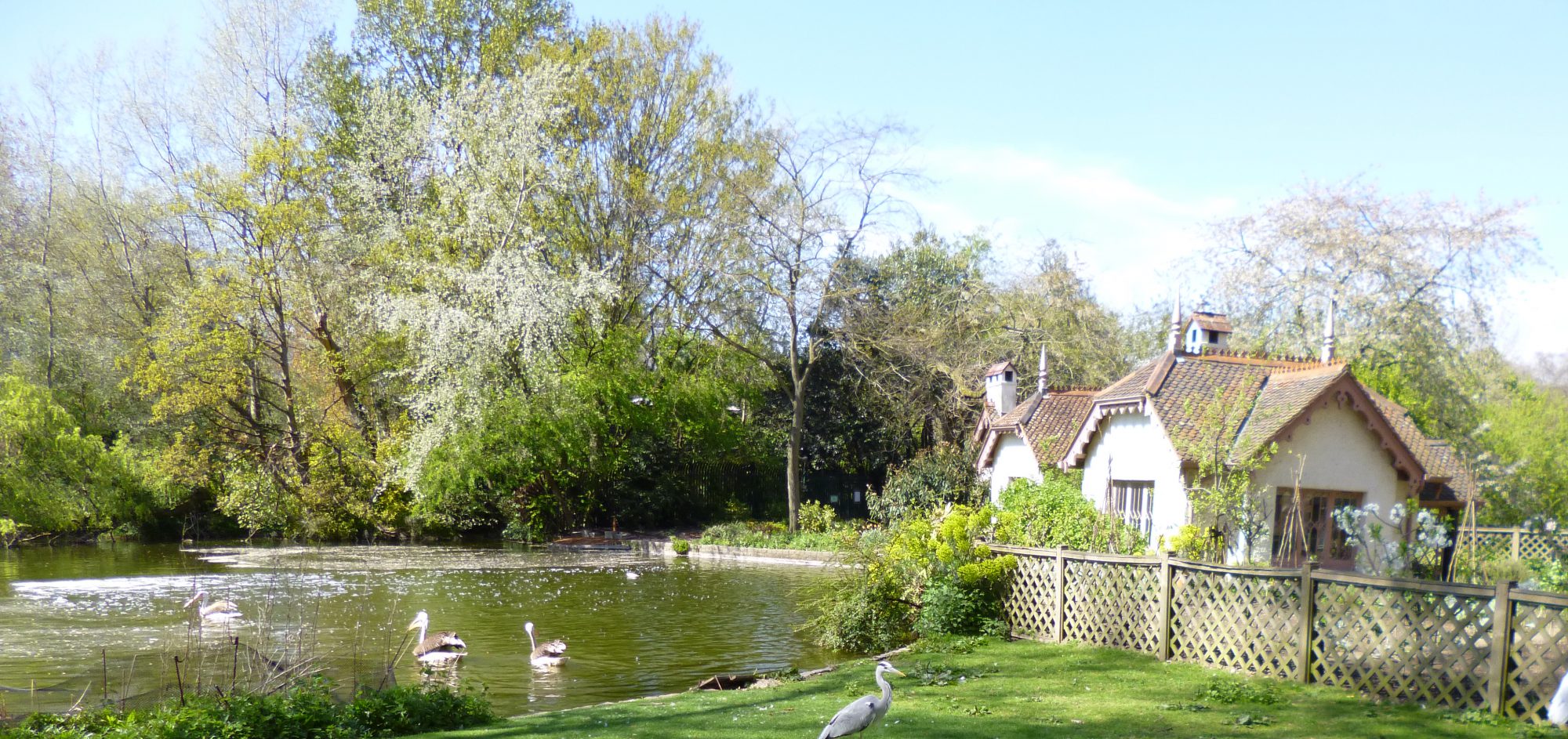
So today, for me, is a day of “Thank Yous.”  I have so much to be grateful for, and, walking through my beloved St James Park yesterday, where the daffodils and crocuses are out in bloom, just made me realise how fortunate I am.  Thank you Universe, for all that beauty!

Thank you to everyone who reads this blog!  Anyone who knows me knows that I am preparing myself for my future life if I am made redundant later this year, hence writing as much as I can now.  This is a showcase for some of my work; so thank you all, and please keep reading.  (And, if you like the posts, maybe you would consider “liking them” on Facebook, Twitter and Google+.)

Next, I want to thank my friends and family.  In particular, I’d like to thank my friend Anne Germain.  Anne and I have been friends for many years, since we first worked together, and have shared tears and joys and the odd glass of wine or two!  Anne took the plunge and started doing what she loves a number of years ago.  I’ve had a number of private readings from her, and I can tell you, she is spookily accurate.  Always makes for an interesting evening, when she can tell me what’s happening in my life before I know about it!

You can check out her website at http://www.annegermain.co.uk

I’d like to thank Linda Formichelli, a freelance writer.  I don’t know Linda personally, but I wholeheartedly recommend her book “Write Your Way Out of the Rat Race,” not just for wannabe writers, but anyone who is thinking of becoming self-employed.  And while I’m on the subject of writers’ resources, thank you also to Sheryl Jacobs for “50 Freebies for Frugal Writers.”  There are lots of other books out there, but I haven’t read them all yet.  (Note the word “yet.”  I’m sure I’ll get around to it.)

Lisa Irby is another one of my heroines.  She has a website about setting up websites, and she explains things in a really simple way.  http://www.2createawebsite.com

Sophie Lizard is also a favourite.  With so many resources available on the web, sometimes it’s hard to know which ones are worth looking at.  I’m not saying that none of the others are any good, just that these are ones I like.  http://beafreelanceblogger.com

Thank you everyone, for all your help and support.  I’ll let you know on this blog when I publish my first book, and I shall pray that you all buy it.

And if you want to check out more of my work, take a look here:

http://wizzley.com/authors/Telesto


©Susan Shirley 2014

You can follow me at:

https://twitter.com/SusanShirley2  or https://www.facebook.com/susan.shirley1